
Grease Trap Pumping in Chattanooga, TN
We connect Chattanooga-area homeowners with independent local septic pumping, inspection and repair companies for free, no-obligation quotes. We do the same for restaurants, churches, schools and other food-service operators. Here is how grease trap pumping works for kitchens on septic, what Tennessee’s rules say about who may haul the waste, typical per-visit prices and how to set a schedule.
Get a Free Quote Call (727) 300-6656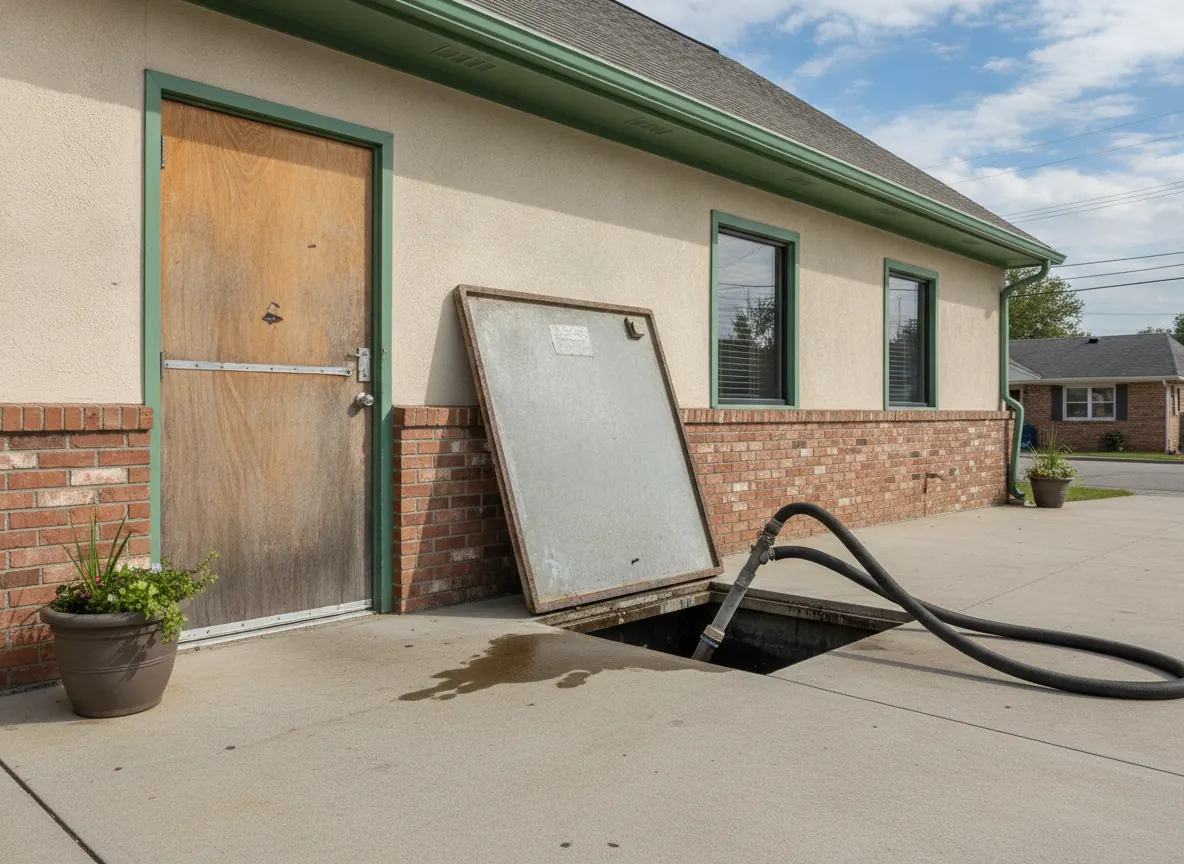
Grease traps on septic systems
A grease trap or interceptor slows kitchen wastewater down long enough for fats, oils and grease to float and food solids to settle, so that only the water in between moves on. Tennessee’s septic rules address it directly. Rule 0400-48-01-.14 says kitchen drain lines from “institutions, hotels, restaurants, schools, lunchrooms and other establishments from which flow a relatively high volume of grease may be discharged to a grease trap,” that the trap’s effluent “shall also be treated in the septic tank before being discharged into the disposal field,” and that a cover must be “conveniently accessible for servicing and cleaning.”
That last line is the whole point of regular pumping. Grease that gets past a full trap reaches the septic tank, then the drain field, and a clogged field on a commercial lot is far more expensive than a service contract. Where the business sits matters: unincorporated Hamilton County “predominately does not have sewers,” as county officials said in 2025, and as recently as 2020 a new store at East Brainerd Road and Bill Jones Road in Apison was planned on septic because no sewer line reached the site.
What a grease trap pump-out includes
Open and measure
The hauler opens the cover and measures the grease cap and the solids layer. That measurement, repeated each visit, is what sets a sensible schedule rather than a guess.
Pump the full contents
A proper service removes grease, water and solids together rather than skimming the grease off the top and leaving the settled layer. Ask for a full pump-out, not a skim, and confirm it on the invoice.
Scrape, inspect and jet
The walls and baffles are scraped, the inlet and outlet tees are checked, and, where lines are sluggish, the kitchen line is jetted as a separately priced extra.
Document and haul
You receive a receipt with the date, volume and the hauler’s permit number. The load is hauled to an approved disposal point, not to the septic tank and not to a land-application field.
Indoor under-sink traps are cleaned the same way on a shorter cycle. Many operators pair the visits with routine septic tank pumping for the main tank so one truck handles both.
Who may pump a grease trap, and where the waste goes
For a trap that drains to a septic system, the answer is in TDEC Rule 0400-48-01-.20(1): “Septic tank pumping contractors are authorized under the domestic septage removal permit to pump the contents of grease traps that are a part of subsurface sewage disposal systems. This grease trap waste must be disposed of in a manner approved by the Commissioner. Grease trap waste may not be disposed of on a domestic septage disposal site.” So the hauler needs the same annual TDEC pumper permit any residential pumper carries, with its December 31 expiry and the permit number lettered on both sides of the truck, plus the Hamilton County pumper license the county requires of pumpers working here. Both the TDEC Installers & Pumpers DataViewer and the county’s 2026 list are public; check them.
For a kitchen on City of Chattanooga sewer, grease control is a matter between the business and the sewer utility, and that program was not part of our research. In that case, ask the hauler where your trap waste goes and ask the utility what service records and trap sizing it expects. Haulers discharging to the city’s hauled-waste facility hold a $100-per-vehicle-per-year permit; grease loads may be routed differently from septage, so ask. The general rules of who regulates what are in who regulates septic in Hamilton County.
Grease trap pumping prices in Chattanooga
| Item | Typical range |
|---|---|
| Grease trap pumping | $200–$500 per visit |
| Large outdoor interceptor, emergency clog, or a trap long overdue | more; ask for a written figure |
| Kitchen line jetting | priced separately; ask |
| Septic tank pumping for the main tank, 1,000 / 1,500 gal | $225–$400 / $345–$600 |
Typical national ranges from Fixr (2025) and HomeAdvisor (2026) — estimates, not quotes. Hamilton County fees are government charges, not contractor prices.
Scheduled service is usually priced below one-off calls, and a monthly or quarterly contract also produces the service history inspectors ask for. Because a clogged trap tends to announce itself on a Friday night, ask up front what an after-hours visit costs; typical national grease trap figures were thin in our research, so treat the band above as wide and get local quotes. Related figures are in the cost guide.
Setting a schedule that holds up
Three things drive the interval: trap volume, menu (fryers and griddles load a trap far faster than a sandwich line) and dish volume. A common working rule is to pump before grease and solids occupy a quarter of the trap’s depth; the hauler’s measurements from the first two or three visits will show how quickly that happens in your kitchen. Churches and schools with weekend or seasonal kitchens often need less frequent service but should not skip the measurement, because a trap that sits full through a hot summer is unpleasant to open in September.
Septic Pumping Chattanooga does not pump traps or haul anything. The independent pumping companies you hear from through the quote form quote the work; tell us the trap type (under-sink or in-ground), its size if known, how many meals a day you serve and when it was last pumped, and we usually reply the same day.
Grease trap pumping FAQ
How often should a restaurant grease trap be pumped?
It depends on trap size and how much fryer and dish water passes through it. Small under-sink traps in busy kitchens can need monthly service; large outdoor interceptors are often on a quarterly schedule. The usual working rule is to pump before accumulated grease and solids take up a quarter of the trap’s depth. Ask the hauler to measure on the first visit and set the interval from what they find.
How much does grease trap pumping cost in Chattanooga?
Typical ranges run $200–$500 per visit, with large interceptors, emergency call-outs and traps that have gone too long between services costing more. Many haulers discount a scheduled monthly or quarterly contract against one-off visits. These are estimates, not quotes; ask for a written price per visit, what trap size it assumes, and whether line jetting is extra.
Who is allowed to pump a grease trap in Tennessee?
For a trap that is part of a septic system, TDEC Rule 0400-48-01-.20(1) authorizes septic tank pumping contractors to pump it under their Domestic Septage Removal Permit, and requires the grease waste to be disposed of in a manner approved by the Commissioner, not on a domestic septage land-application site. For a trap on city sewer, ask the hauler and your sewer utility what applies; that program was outside our research.
Can grease trap waste go into the septic tank?
No. Grease trap effluent, the water that leaves the trap, flows on to the septic tank under Rule 0400-48-01-.14, but the grease and solids pumped out of the trap must be hauled away and disposed of as the rule requires. Putting trap waste into a septic tank or onto the ground would overload the tank and foul the drain field. A hauler should be able to tell you exactly where the load goes.
What records should a business keep for grease trap service?
Keep every service receipt showing the date, the volume removed and the hauler’s permit number, plus any disposal manifest the hauler provides. Pumping contractors are required by TDEC rule to keep a monthly log of pumpings and discharges, so a hauler who cannot produce a receipt is a warning sign. Health and sewer inspectors commonly ask to see service history, and a tidy file makes that visit short.
Slow drains or a soggy yard? Get a clear quote first.
Free, no-pressure quotes across Chattanooga, Ooltewah, Soddy-Daisy, Signal Mountain and Hamilton County.