
Septic Tank Pumping in Chattanooga, TN
We connect Chattanooga-area homeowners with independent local septic pumping, inspection and repair companies for free, no-obligation quotes. Here is how often a Hamilton County tank usually needs pumping, what a pump-out includes, typical prices by tank size and the two permits to ask any pumper for.
Get a Free Quote Call (727) 300-6656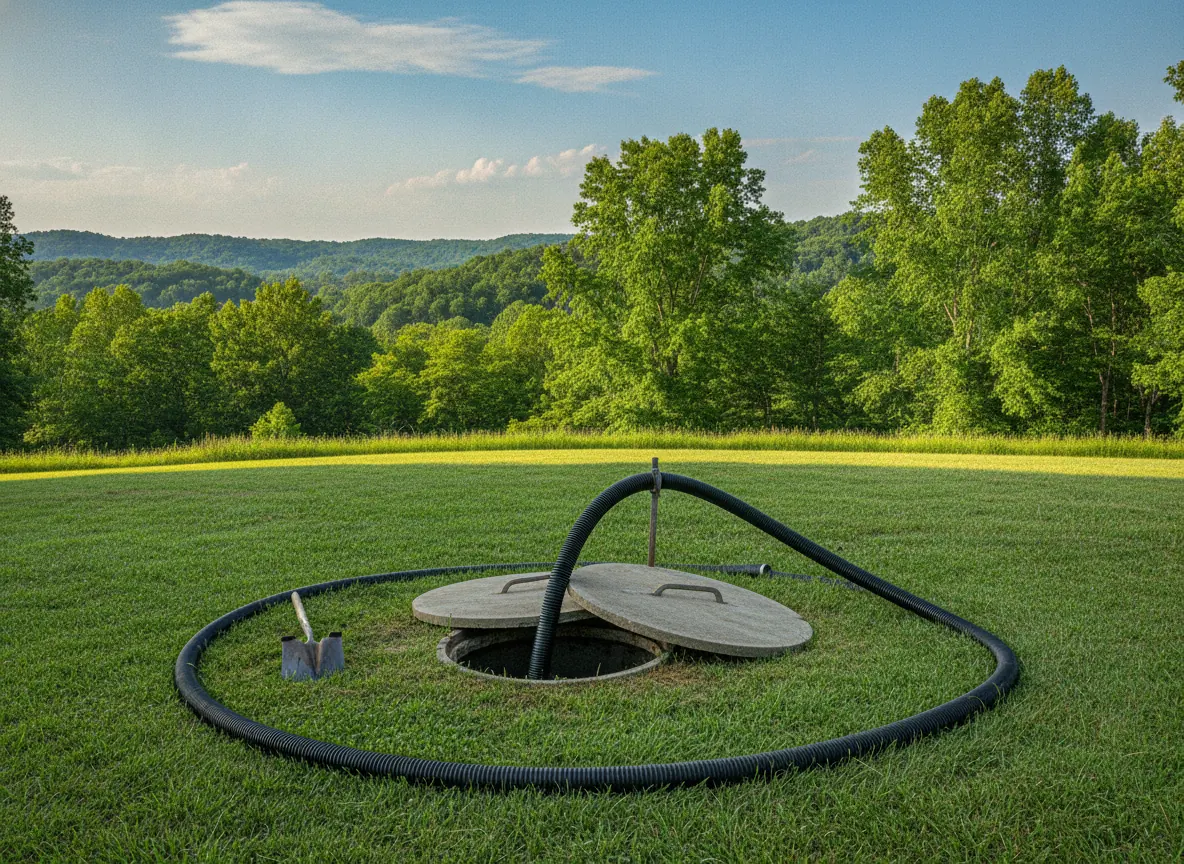
What a septic tank pump-out includes
A pump-out removes everything in the tank: the floating scum layer, the liquid in the middle and the sludge that has settled on the bottom. The company locates the tank, uncovers the lid or opens the riser, measures the sludge and scum depth, then runs the vacuum hose in. A thorough job stirs and backflushes the contents so the solids come out, not just the liquid off the top; a “full cleaning” adds a wash-down of the walls.
Before the lid goes back on, a careful pumper notes what the empty tank reveals: whether the inlet and outlet baffles are intact, whether an effluent filter is present and needs cleaning, whether the liquid level had risen above the outlet (a sign the drain field is not taking water), and whether the walls show cracks or roots. Ask for those observations in writing on the invoice. If the lid is buried, ask for the locating-and-digging charge as a flat fee before the truck arrives. The visit, step by step, is on our how it works page.
How often should a septic tank be pumped in Hamilton County?
Tennessee’s septic regulations (TDEC Rule Chapter 0400-48-01) do not set a pumping interval. Rule .13 makes it “the property owner’s responsibility to maintain the system in a safe and sanitary manner,” and leaves the schedule to you. The U.S. EPA’s guidance: “Household septic tanks are typically pumped every three to five years,” and the system should be “inspected at least every three years by a septic service professional.”
Where you fall in that range depends on tank size, how many people live in the house and whether a garbage disposal sends extra solids to the tank. Tennessee sizes tanks by bedroom count (Rule 0400-48-01-.08): two bedrooms or fewer, 750 gallons; three bedrooms, 900 gallons; four bedrooms, 1,000 gallons; and 250 gallons more for each additional bedroom. Six people and a disposal fill a 1,000-gallon tank far faster than two occupants do.
Timing in Chattanooga is about rain, not cold. Lovell Field averages 55.00 inches of rain a year (NOAA 1991–2020 normals), and December through March alone bring 20.6 inches, when drain fields in the county’s clay soils sit wettest. August through October are the three driest months, so late summer and early fall is the easiest time to get a loaded truck onto firm ground. Hamilton County’s median home was built in 1982 and 36.9 percent of units date from 1970–1999 (ACS 2024 5-year), so many tanks in Harrison, Middle Valley, Soddy-Daisy and Sale Creek are original concrete tanks well into their service life.
Signs a tank is due
- Slow drains throughout the house, not just one sink. A single slow fixture is usually a plumbing clog.
- Odors near the tank lids or over the field, especially after heavy use.
- A soft or unusually green strip of lawn over the field lines, or standing water there after a dry week.
- No record of the last pump-out since you bought the house.
Several of these can also point to a drain field or house-line problem, which is why the company should report what the open tank showed. If wastewater is already backing up indoors, see the emergency page first.
Septic tank pumping prices in Chattanooga
| Item | Typical range |
|---|---|
| Septic tank pumping, 750-gallon tank | $175–$300 |
| Septic tank pumping, 1,000-gallon tank | $225–$400 |
| Septic tank pumping, 1,250-gallon tank | $300–$600 |
| Septic tank pumping, 1,500-gallon tank | $345–$600 |
| Pumping, national average | about $400 (typical $300–$600) |
| Extra for an unknown or buried lid (locating and digging) | varies; ask for a flat fee |
| Effluent filter clean / replace | $100–$200 / $200–$300 |
Typical national ranges from Fixr (2025) and HomeAdvisor (2026) — estimates, not quotes. Hamilton County fees are government charges, not contractor prices.
Companies quote mainly by tank size and access. If you do not know your tank size, the bedroom rule above gives the minimum Tennessee would have permitted, and the county permit on file gives the actual figure. Our cost guide covers what moves a quote up or down.
Who is allowed to pump a septic tank in Hamilton County
Two credentials, from two governments, both public. Ask for them before you book.
TDEC Septic Tank Pumping Contractor permit
Rule 0400-48-01-.20 requires anyone in the business of removing domestic septage from septic tanks to hold an annual Domestic Septage Removal Permit from TDEC. The truck is inspected by TDEC’s Chattanooga Environmental Field Office, the permit expires every December 31, and Rule .20(5) requires the firm’s name, address and permit number on both sides of the truck in letters at least two inches high. TDEC publishes the holders in its Installers & Pumpers DataViewer.
Hamilton County pumper license
Hamilton County is a TDEC “contract county” with its own septic program under the Division of Groundwater Protection (1250 Market St, Chattanooga; 423-209-7876), and it requires its own pumper license on top of the state permit. The county posts a 2026 “List of Septic Installers and Pumpers” online. In Bradley County (Cleveland) the state permit alone applies.
Where the waste goes is regulated too: haulers discharging to the City of Chattanooga’s hauled-waste facility hold a $100-per-vehicle-per-year permit; the alternative is a TDEC-permitted land-application site. Ask which they use.
Septic Pumping Chattanooga does not pump tanks and holds none of these permits. The independent companies you hear from through the quote form do the work; checking their permit numbers against the two public lists takes a couple of minutes. For the full picture, read who regulates septic systems in Hamilton County.
Septic tank pumping FAQ
How often should a septic tank be pumped in Chattanooga?
Tennessee’s septic rules set no interval, so the working guidance is the EPA’s: household tanks are typically pumped every three to five years and inspected at least every three years by a septic professional. A 750-gallon tank serving a full house, or any tank fed by a garbage disposal, lands at the short end. If you cannot find a record of the last pump-out, have the tank opened and measured and start the clock from there.
How much does septic tank pumping cost in Chattanooga, TN?
Typical national ranges run $175–$300 for a 750-gallon tank, $225–$400 for 1,000 gallons, $300–$600 for 1,250 gallons and $345–$600 for 1,500 gallons, with a national average of about $400 (Fixr, 2025). Locating and digging up a buried lid is extra and varies, so ask for it as a flat fee. These are estimates, not quotes; compare written quotes from more than one company.
How do I find my septic tank?
Start with the permit. Hamilton County’s Division of Groundwater Protection holds the county’s septic permit records, and the permit sketch usually shows where the tank sits relative to the house; outside the contract county, TDEC’s files are searchable online. Otherwise, follow the main drain line out from the foundation. Pumping companies carry probes and flushable transmitters and will locate a tank for a fee; ask up front.
Should I add bacteria or refill the tank after pumping?
Neither is necessary. Normal household use refills the tank within days, and the bacteria that digest waste arrive with every flush. Pumping companies and the EPA’s care guidance focus on what actually extends a system’s life: pumping on schedule, spreading out laundry loads, and keeping grease, wipes and solvents out of the drains. No additive replaces a pump-out.
Can a septic tank be pumped in winter or during rain?
Yes. Chattanooga averages only 3.9 inches of snow a year, so frozen ground is rarely the issue. Saturated ground is: December through March bring 20.6 inches of rain (NOAA 1991–2020 normals), and a loaded vacuum truck can rut a lawn or crush field lines. Many companies also delay pumping a tank sitting in flooded ground, because an empty tank can shift or float.
Slow drains or a soggy yard? Get a clear quote first.
Free, no-pressure quotes across Chattanooga, Ooltewah, Soddy-Daisy, Signal Mountain and Hamilton County.